


Industry under stress test: Where Austria must act now
01
Industry Forum Herakles Management ✕ TenglerConsulting
At the first Industry Forum hosted by Herakles Management and Tengler Consulting on November 13, 2025, at Palais Berg, leading voices from business and politics discussed the question of what strategic footprint Austrian industry can have in the future. The event was hosted by Dr Bernhard Morawetz, the CEO of Herakles Management, and Andreas Tengler, the CEO of Tengler Consulting. Multiple perspectives met directly on the panel: Dr Andreas J. Ludwig (Member of the Executive Board at Management Trust Holding AG), Cord Prinzhorn (Chairman of the Supervisory Board at Semperit AG and Prinzhorn Holding GmbH), and Martin Ohneberg (CEO at HENN Connector Group and Chairman of the Supervisory Board at Verbund) represented the business viewpoint. The political perspective was contributed by Anna Stürgkh, Member of the European Parliament. Together, they portrayed a complex and alarming picture of the current situation.
02
Austrian industry under pressure
Attendees agreed that the economic situation had become not only tense, but also critical in some areas. Dr Ludwig referred to an analysis by Agenda Austria showing that Austria was losing competitiveness compared to other regions which is affecting the current business sentiment of many companies. The domestic industry continues to produce high-quality, technologically sophisticated products. However, an increasing number of stringent bureaucratic requirements, coupled with consistently high wage and energy costs, are slowing down the country’s performance.
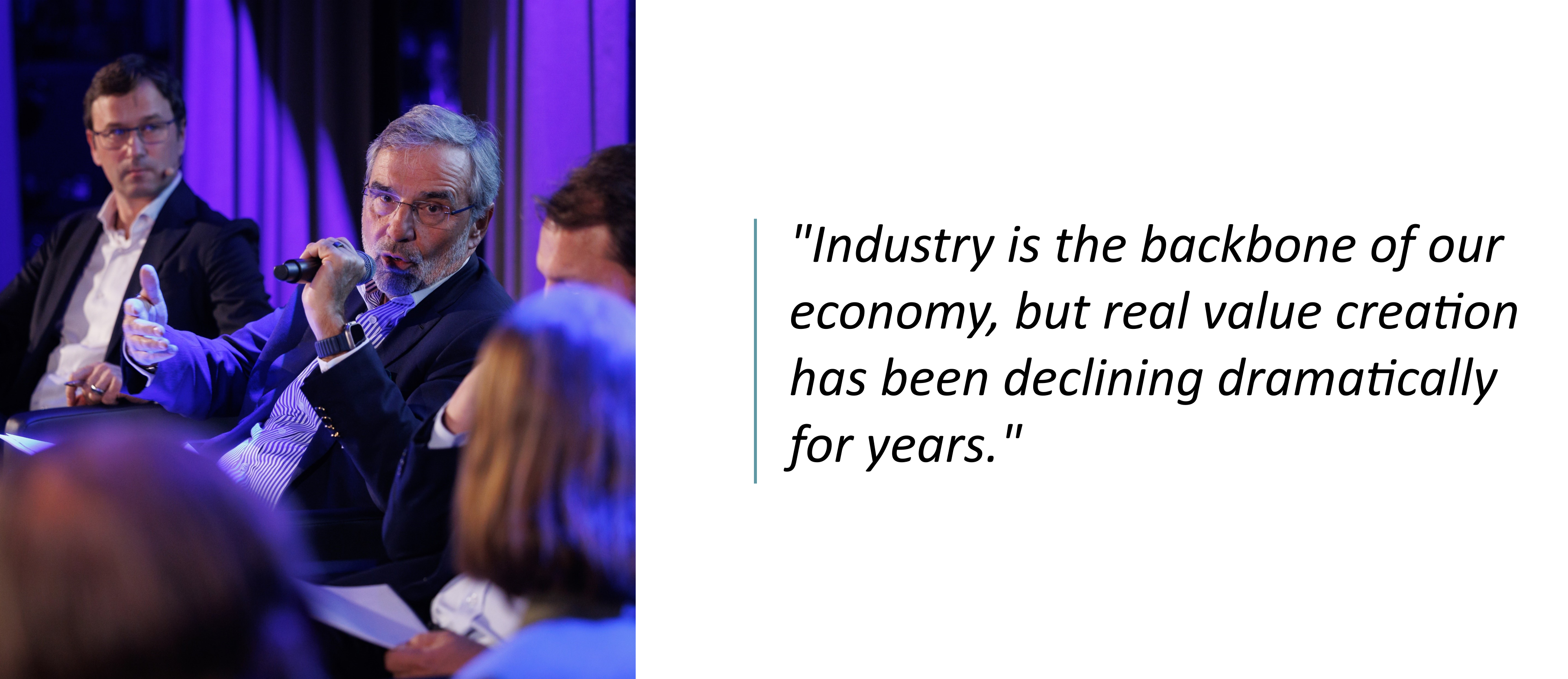
Andreas J. Ludwig – Member Executive Board Management Trust Holding AG
03
Faster, bolder, more pragmatic: competition from abroad
Meanwhile, Europe is facing a new industrial reality emerging outside its borders that is much faster, bolder and often surprisingly pragmatic. Countries and markets that were previously seen as merely production locations are now magnetizing innovation and capital, developing into global industry leaders. Cord Prinzhorn emphasised this point by giving several real-life examples. While European tech companies often struggle to grow in their home market, the US offers access to venture capital on a completely different scale. At the same time, competition from Asia is growing significantly. Prinzhorn emphasized that these regions no longer produce only low-cost alternatives, but technologically almost equivalent products—at drastically lower costs. For instance, a hydraulic pump that costs around €16,000 in Europe can be purchased in China for only €4,000. Aside from the lack of a label, both have the same key technical characteristics. Prinzhorn also described fully automated injection moulding machine facilities which achieve significant productivity gains by running as a “dark factory”. Additionally, he mentioned higher productivity in countries such as Turkey due to their six-day working week.
However, Dr Ludwig suggested that Austria should not exclusively benchmark itself against the US or China but rather try to catch up with closer neighbours such as Denmark and Switzerland. These countries implemented structural reforms covering areas such as pensions, education and retirement provisions much earlier, thereby creating the resilience that Austria lacks today. There the state has proven that timely adjustments can modernise and stabilise entire industries in the long term.
The common ground: good products alone are no longer sufficient in today’s rapidly evolving world. Without greater entrepreneurial courage, speed, and a genuine risk culture, there is a growing danger of falling behind major players and losing the critical window of opportunity for necessary change.
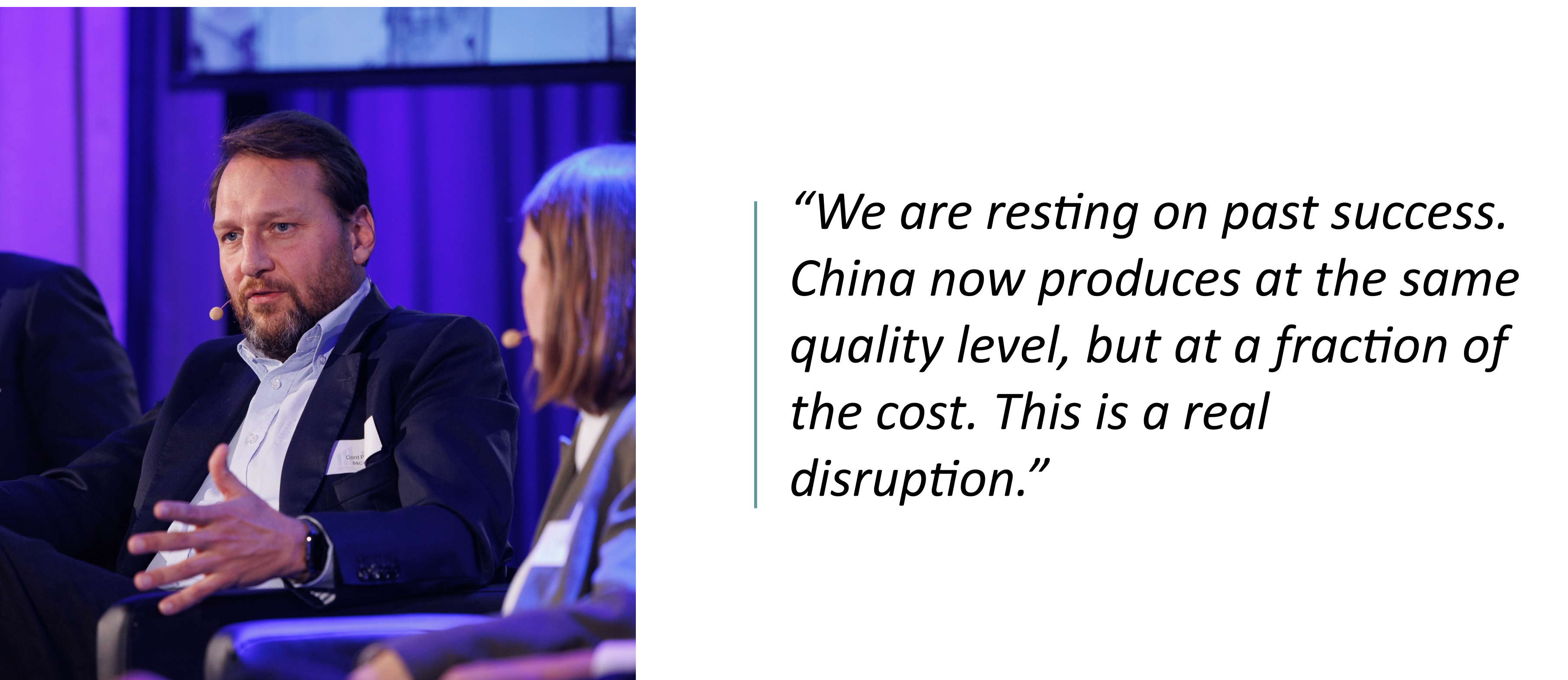
Cord Prinzhorn – Chairman of the Supervisory Board, Semperit AG, Chairman of the Supervisory Board, Prinzhorn Holding GmbH
04
Climate policies versus industry
Dr Ludwig attributed the increasing competitive pressure on European industry to a combination of restrictive legal requirements, bureaucratic hurdles and the growing debate about the deindustrialisation in Europe, highlighting the potentially serious consequences for prosperity.
In contrast, Anna Stürgkh warned against pitting climate policy against industrial policy. According to the politician, the problem lies in the way these policies are translated into national legislation, often being too bureaucratic, fragmented and slow to adapt to industrial practice. Rather than acting as a motivating factor for development and innovation, they create additional obstacles to growth and expansion. Stürgkh cited the Carbon Border Adjustment Mechanism (CBAM) as an example of improved regulation: although around 90 per cent of companies were excluded from the regulation, around 90 per cent of emissions remained covered. For Stürgkh, it is an important step towards reducing administrative burdens while still pursuing targeted climate goals.
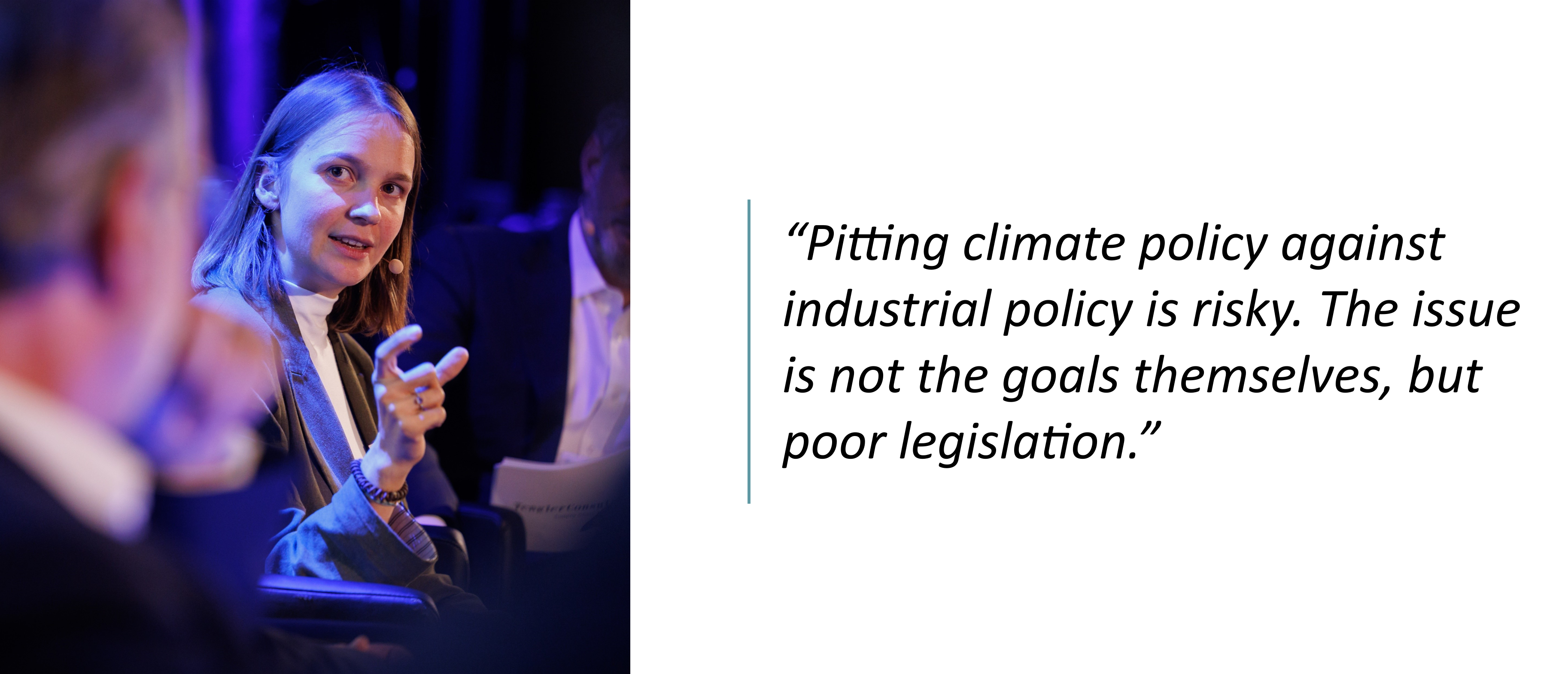
Anna Stürgkh – Members of the European Parliament
05
Deepening the internal market, strengthening the capital market, leveraging trade agreements
During the discussion, participants highlighted that Austria’s industry could benefit significantly from the European single market. Prinzhorn emphasised that those producing for the European market can secure their future. However, to achieve success, the internal market, and particularly the capital market, must be strengthened. Stürgkh criticised the fact that the internal market is still highly fragmented by the 27 different national legislations. An absence of agreement on European economic policy, along with the potential for different national interpretations of EU directives, essentially results in hidden European customs duties. The International Monetary Fund has calculated that regulatory barriers to trade in goods are equivalent to a 40% tariff, and over 100% for services. Moving away from directives and defining genuine European rules would make it easier for companies that want to operate throughout Europe, Stürgkh argued.
Furthermore, all members of the panel agreed on the need to expand into new export markets. Stürgkh underlined the opportunities offered by the Mercosur Agreement, pointing out that European exports to Mercosur countries currently exceed those to the United States. Also, during the discussion about opposing interest groups in Austria, the panel showed little sympathy.
06
New approach to industry
The participants discussed various ways to develop Austrian industry. Martin Ohneberg emphasised that Austria should not attempt to match the production capabilities of major global players, which are unattainable in terms of scale. He expects European production capacities to shrink in future and plans to invest in India, Mexico and China rather than Europe.
Ohneberg believes that Austria should change its mindset and focus on expanding its strengths as a holding location and innovation hub. By promoting R&D activities and growing top universities, the most important resource – knowledge – would be retained in the country.
Moreover, Ohneberg introduced the idea of a European local content strategy. Just as China has required European manufacturers to produce goods locally, Europe could oblige car manufacturers such as BYD to manufacture vehicles in the EU for the domestic market. According to Ohneberg, the model should now be reversed, with technology transfer and development aid flowing into Austria and Europe.
Prinzhorn agreed, encouraging companies to consider the Chinese government’s economic plans when shaping their corporate strategy. By orienting themselves towards the five-year plan, they could identify the business areas in which they could expect Chinese competition and those in which Europe still has a chance. He also urged companies to focus constantly on cost optimisation, suggesting the relocation of Shared Service Centres abroad as one possible measure. He added that Austria had forgotten to raise sales prices for fear of losing sales and was consequently falling behind Eastern Europe.
Additionally, Dr Ludwig called for a significant reduction in regulation and subsidies to allow market mechanisms to take effect again. A liberated industry could stimulate innovation and boost production in Europe.
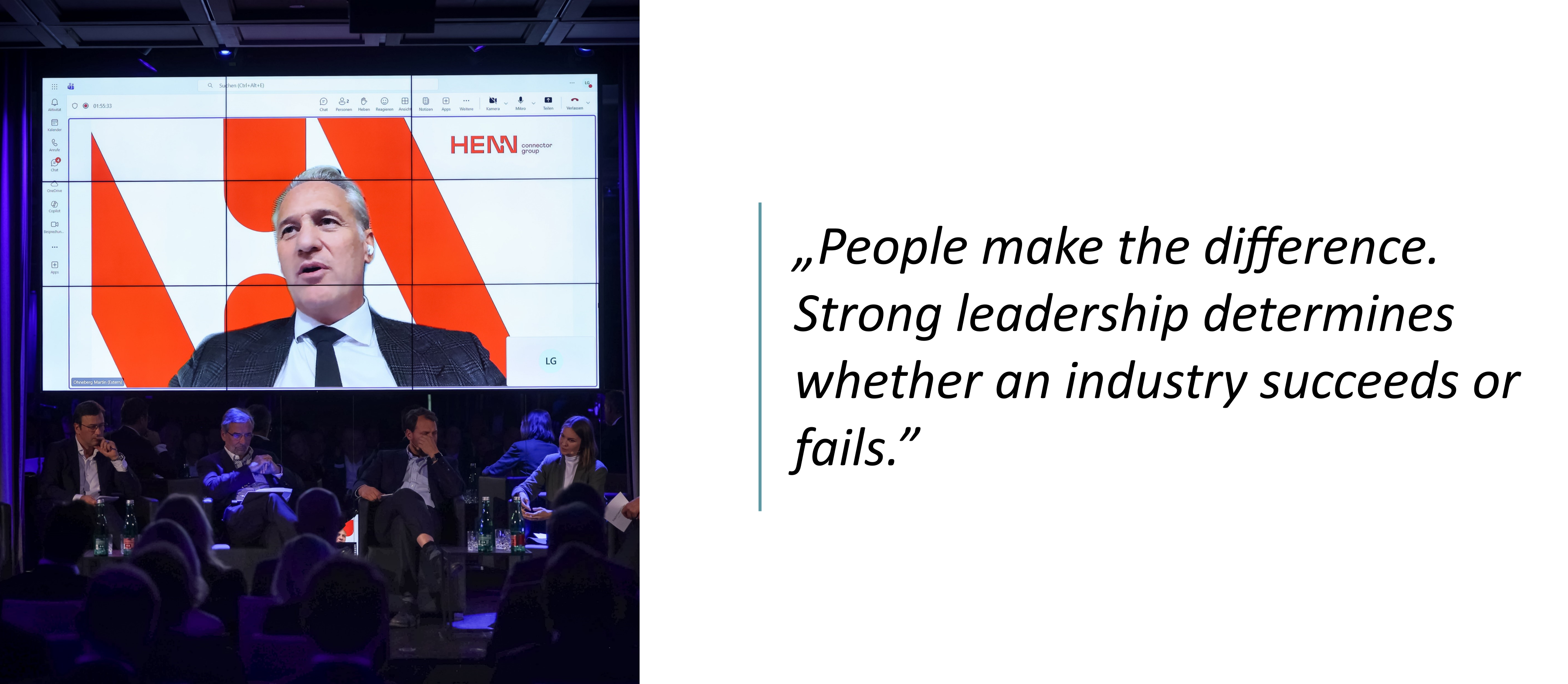
Martin Ohneberg – CEO/Owner, HENN Connector Group and President of the Supervisory Board, VERBUND
07
Conclusion: The clock is ticking.
The ability of Austria to initiate reforms independently remains questionable. There are many signs that the pace of global competition is exceeding the capacity for political decision-making.
Dr Ludwig observed a lack of willingness to reform in Austria and predicted that the crisis would worsen. Prinzhorn shared this view, fearing that genuine reforms would only be triggered by a severe shock to the system. However, some assessments were more positive: Stürgkh saw an opportunity for political and economic realignment through stronger European integration, while Ohneberg emphasised that industry must act autonomously from now on.
The Industry Forum, organised by Herakles Management and TenglerConsulting with almost 100 participants, also demonstrated that the tools for change are well acknowledged: an integrated EU internal market, bold investment decisions, reduced bureaucracy, and increased innovation. Therefore, rather than questioning what needs to be done, Europe must consider how much time it has left to do it.
08
TenglerConsulting: Guidance in turbulent times
Recent discussions on competitiveness, alignment of global supply chains and continuous cost optimisation have confirmed the value of our work with internationally active industrial companies. TenglerConsulting supports industrial companies in optimising their supply chains, reducing costs, and aligning supply chain management for the future. Together with our clients, we develop the structural resilience and agility their companies need to innovate, react and remain competitive in their markets.
09
Further photos:
You can find more photos from the event at the following link:
Industrial forum 2025 – TenglerConsulting x Herakles Management